
Information about Back Pain
Patient information
Urgent: know the warning signsSee warning signsBack pain is common — and usually gets better
About 8 in 10 people have back pain at some point. Most cases have no serious cause and improve within 2 to 6 weeks. This packet does not replace advice from your doctor.
Anatomy of spine
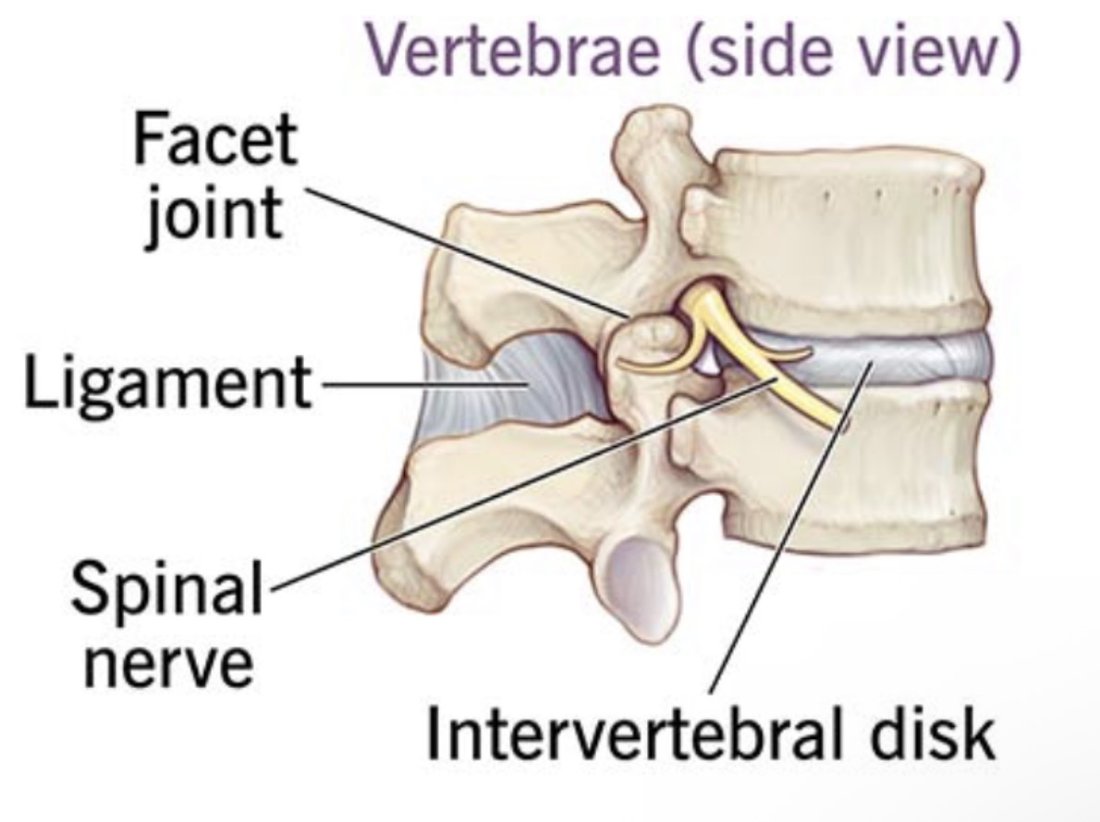
Your spine is a column of bones (vertebrae) separated by rubbery cushions (discs). Small facet joints at the back guide movement, and muscles and ligaments hold it steady. Nerves leave the spine through small openings at each level.
What causes back pain
About 9 in 10 cases are "mechanical" — a strain of the muscles, ligaments, joints or discs. Serious causes are rare.
| Cause | Typical symptoms |
|---|---|
| Muscle or ligament strain | Aching, stiffness, spasm; no leg symptoms |
| Disc herniation ("slipped disc") | Sharp pain shooting down one leg (sciatica), tingling, numbness |
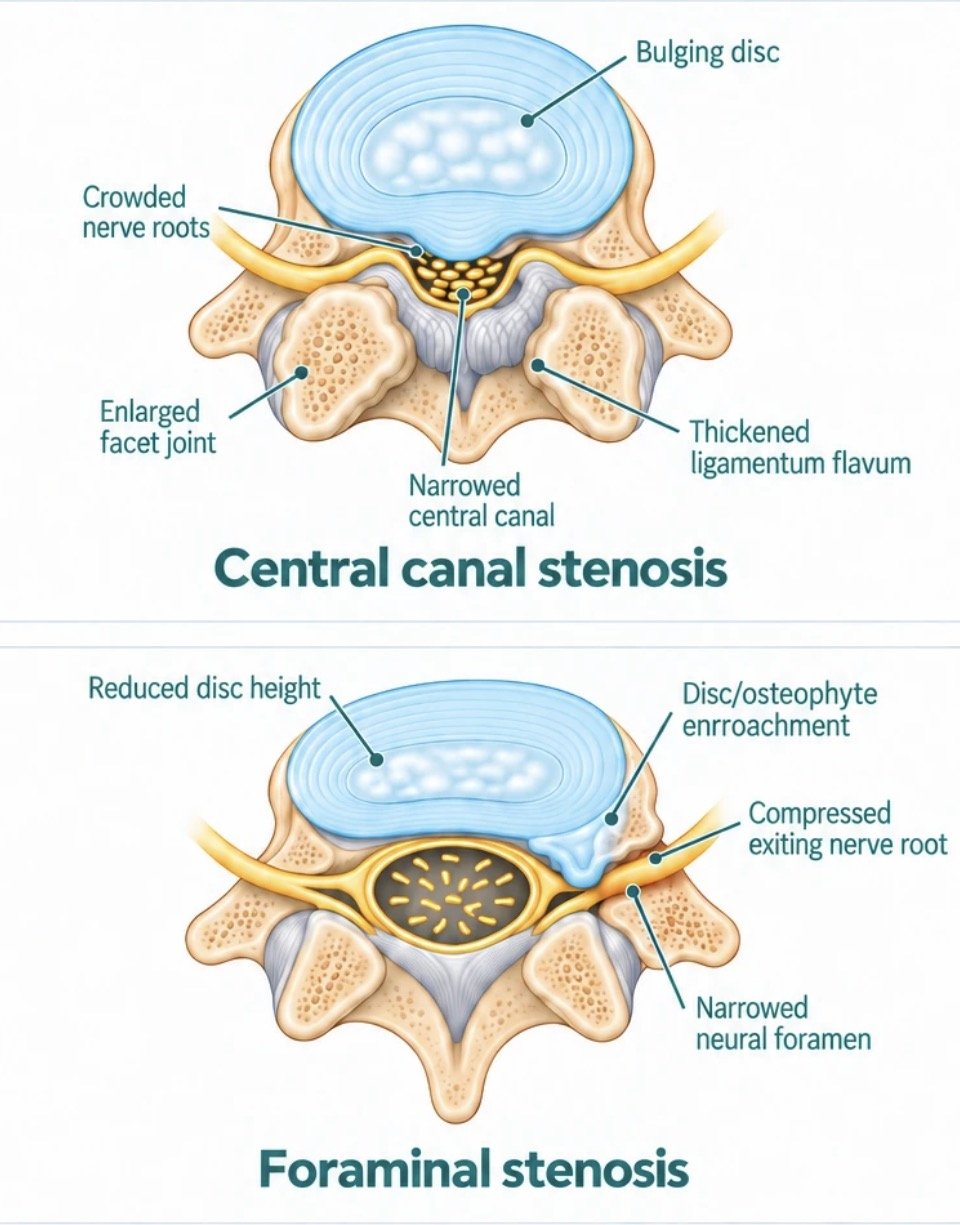
| Spinal stenosis (narrowed canal) | Leg pain or heaviness when walking, eased by sitting or bending forward |
| Facet joint arthritis | Pain on leaning back or twisting; morning stiffness |
| Fracture, often from weak bones | Sudden severe pain, sometimes after a minor fall |
| Infection or tumour (rare) | See "Warning signs" |
Things that increase your risk of having back pain
Age over 30, previous back pain, family history
Inactivity and weak core muscles
Excess weight, smoking and poor sleep
Heavy lifting, or long hours of sitting or driving
Weak bones (osteoporosis) and pregnancy
Stress, low mood and fear of movement
Why it hurts
Inflammation: strained tissue releases chemicals that make it sore, worst in the first few days.
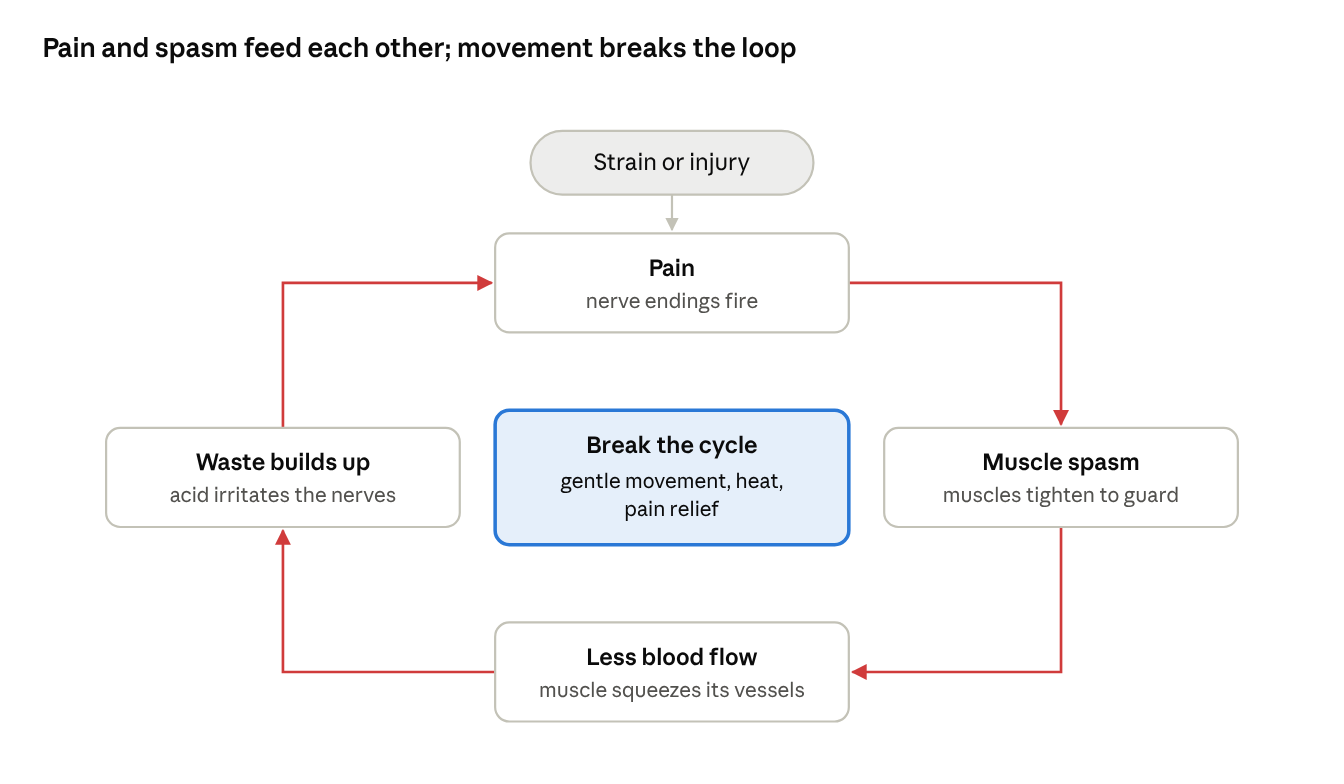
Muscle spasm: muscles tighten to guard the area, squeeze their own blood supply and hurt more — a cycle that gentle movement breaks (Figure 3).
Nerve pressure: a disc or narrowed canal irritates a nerve, sending pain down the leg.
Sensitisation: pain lasting over 3 months can "turn up" the nervous system's alarm. Good sleep, activity and reassurance turn it down.
More about muscle pain
Muscle and ligament strain is the most common cause of back pain. Several processes work together:
Small tears: a sudden load or overuse tears tiny muscle fibres. Damaged cells release chemicals (such as prostaglandins and bradykinin) that switch on pain nerves and make them sensitive to touch and movement.
Guarding and spasm: nearby muscles tighten to protect the area. A muscle that stays tight squeezes its own blood vessels, so less oxygen reaches it.
Waste build-up: with less blood flow, acid and other waste collect in the muscle, irritating the nerves and causing more spasm.
Trigger points: tight, tender knots can form in the muscle and send pain to the buttock or hip.
Deconditioning: avoiding movement weakens the deep muscles that support the spine, so the back strains again more easily.
Fear of movement: worry about causing harm leads to stiffness and guarding, which increases pain.
How muscles heal: inflammation peaks in the first 2 to 5 days, repair takes 1 to 6 weeks, and the new tissue strengthens over the following months. Gentle activity during repair helps the new fibres heal strongly.
Scans often show "wear and tear" in people with no pain at all — usually normal for your age.
Warning signs: get urgent care
Go to the Emergency Department immediately if back pain comes with numbness around the genitals or buttocks, new difficulty passing urine, loss of bladder or bowel control, or weakness in both legs. These can mean cauda equina syndrome, which needs emergency surgery.
See a doctor within 24 hours if you have fever, a history of cancer or unexplained weight loss, pain after a fall or injury, constant pain at night, or long-term steroid use.
Diagnosis
Most back pain is diagnosed by examination alone. Scans (MRI, CT or X-ray) are needed only with warning signs, severe or worsening nerve symptoms, or no improvement after 6 weeks. Early scans do not speed recovery.
Treatment
Self-care
Keep moving: bed rest slows recovery; return to normal activity and work as soon as you can
Walk a little every day and build up gradually
Use heat to ease spasm and stiffness
Change position at least every 30 to 45 minutes
Medicines
Take medicines only as your doctor prescribes, for the shortest time needed.
| Medicine | Type | Key points |
|---|---|---|
| Olfen patch (diclofenac) | Anti-inflammatory patch | Morning and evening, on clean, unbroken skin |
| Roxonin tape (loxoprofen) | Anti-inflammatory patch | Once a day; remove if the skin becomes irritated |
| Mobic (meloxicam) | Anti-inflammatory tablet | Once a day, with food |
| Naproxen | Anti-inflammatory tablet | Usually twice a day, with food |
| Tilax (tizanidine) | Muscle relaxant | Causes drowsiness; not with ciprofloxacin or fluvoxamine |
| Baclofen | Muscle relaxant | Causes drowsiness; do not stop suddenly after regular use |
| Paracetamol | Pain reliever | Do not exceed the daily limit |
Ask your doctor before anti-inflammatories if you have a stomach ulcer, kidney or heart disease, take blood thinners, or are pregnant. Never combine two anti-inflammatories, including a patch with tablets.
Do not drive while taking muscle relaxants, and avoid alcohol.
Get medical help for black stools, vomiting blood or severe stomach pain.
Physiotherapy and exercises
Exercise is the best-proven long-term treatment. Do these once or twice a day, starting with 5 repetitions and building to 10. Stop if you feel sharp pain, or pain or numbness spreads into your leg or arm.
| Exercise | How to do it |
|---|---|
| Lower back | |
| Pelvic tilt | On your back, knees bent: flatten your lower back into the floor. Hold 5 seconds |
| Knee to chest | On your back: pull one knee gently to your chest. Hold 20 seconds, then switch |
| Cat–camel | On hands and knees: slowly arch your back up, then let it sag gently |
| Bird dog | On hands and knees: stretch one arm forward and the opposite leg back. Hold 5 seconds |
| Bridge | On your back, knees bent: squeeze your buttocks and lift your hips. Hold 5 seconds |
| Neck and upper back | |
| Chin tuck | Sit tall: draw your chin straight back. Hold 5 seconds |
| Side bend stretch | Tilt one ear towards your shoulder. Hold 20 seconds, then switch |
| Shoulder blade squeeze | Squeeze your shoulder blades together and down. Hold 5 seconds |
Walking, swimming, Pilates and yoga also help. See your doctor promptly if neck pain comes with arm weakness or numbness, or trouble with balance.
Injections and surgery
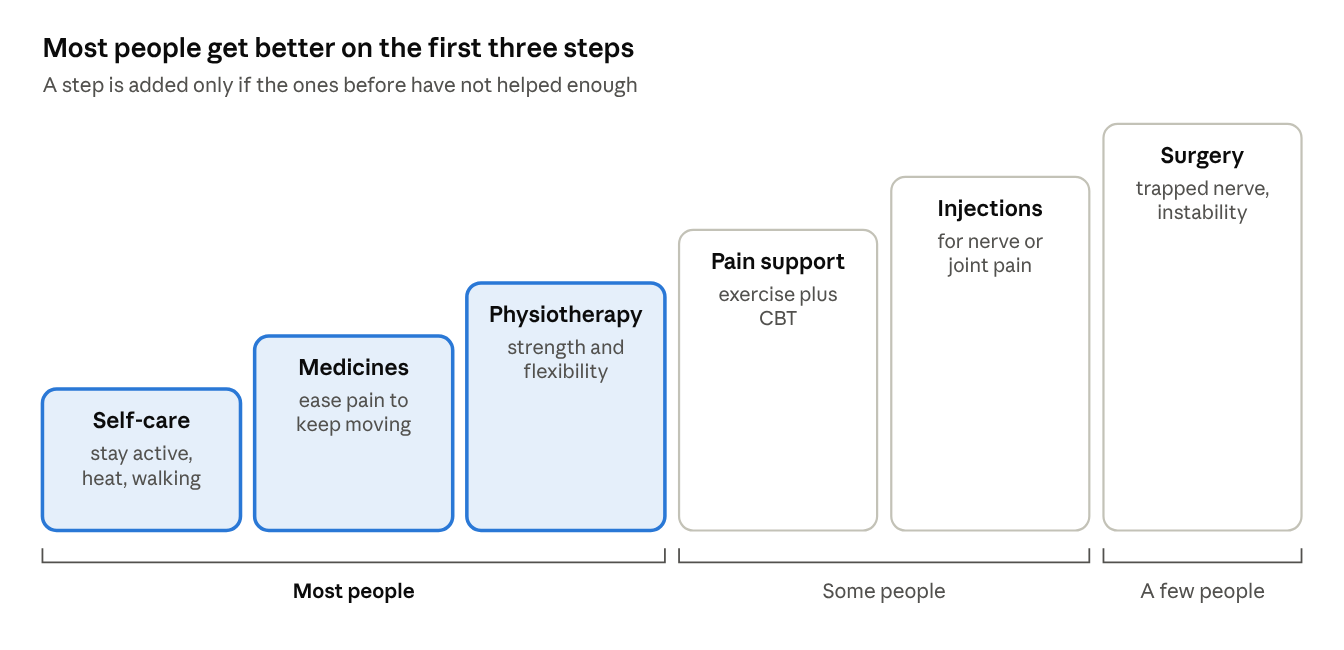
For some people with nerve or joint pain, an X-ray-guided injection can ease pain for weeks to months. Surgery is considered for cauda equina syndrome, worsening leg weakness, or leg pain that stays disabling after 6 to 12 weeks of other treatment. Common operations — microdiscectomy, decompression and fusion — are often done through small incisions, and work best for leg pain from a trapped nerve.
Protecting your back
Stay active: aim for 30 minutes of walking on most days
Keep your core muscles strong and your weight healthy
Lift with bent knees, with the load close to your body
Take breaks from sitting, and stop smoking
When to follow up
See your doctor if pain is not improving after 4 to 6 weeks, leg or arm symptoms are getting worse, or pain stops you from working or sleeping.
معلومات عن آلام الظهر
معلومات للمرضى
هام: اعرف علامات الخطرانظر علامات الخطرآلام الظهر شائعة — وغالبًا ما تتحسّن
يعاني نحو 8 من كل 10 أشخاص من آلام الظهر في مرحلة ما من حياتهم. ولا يكون لمعظم الحالات سبب خطير، وتتحسّن خلال 2 إلى 6 أسابيع. هذا الدليل لا يُغني عن استشارة طبيبك.
تشريح العمود الفقري
العمود الفقري عمود من العظام (الفقرات) تفصل بينها وسائد مطاطية (الأقراص الغضروفية). وتوجّه المفاصل الوجيهية الصغيرة في الخلف حركة الظهر، بينما تحافظ العضلات والأربطة على ثباته. وتخرج الأعصاب من العمود الفقري عبر فتحات صغيرة عند كل مستوى.
أسباب آلام الظهر
نحو 9 من كل 10 حالات «ميكانيكية» — أي إجهاد في العضلات أو الأربطة أو المفاصل أو الأقراص الغضروفية. أما الأسباب الخطيرة فنادرة.
| السبب | الأعراض المعتادة |
|---|---|
| إجهاد العضلات أو الأربطة | ألم وتيبّس وتشنّج، دون أعراض في الساق |
| انزلاق غضروفي (فتق القرص) | ألم حاد يمتد إلى إحدى الساقين (عرق النسا)، مع وخز أو تنميل |
| تضيّق القناة الشوكية | ألم أو ثقل في الساقين عند المشي، يخف بالجلوس أو الانحناء إلى الأمام |
| التهاب المفاصل الوجيهية (خشونة) | ألم عند الميل إلى الخلف أو الالتفاف، وتيبّس صباحي |
| كسر في الفقرة، غالبًا بسبب هشاشة العظام | ألم شديد ومفاجئ، أحيانًا بعد سقوط بسيط |
| عدوى أو ورم (نادر) | انظر «علامات الخطر» |
عوامل تزيد خطر الإصابة بآلام الظهر
العمر فوق 30 عامًا، وإصابة سابقة بآلام الظهر، ووجود تاريخ عائلي
قلة الحركة وضعف عضلات الجذع
زيادة الوزن والتدخين وقلة النوم
حمل الأثقال، أو الجلوس أو القيادة لساعات طويلة
هشاشة العظام والحمل
التوتر والمزاج المنخفض والخوف من الحركة
لماذا يحدث الألم؟
الالتهاب: تُفرز الأنسجة المُجهدة موادَّ كيميائية تجعلها مؤلمة، ويكون الألم في أشدّه خلال الأيام الأولى.
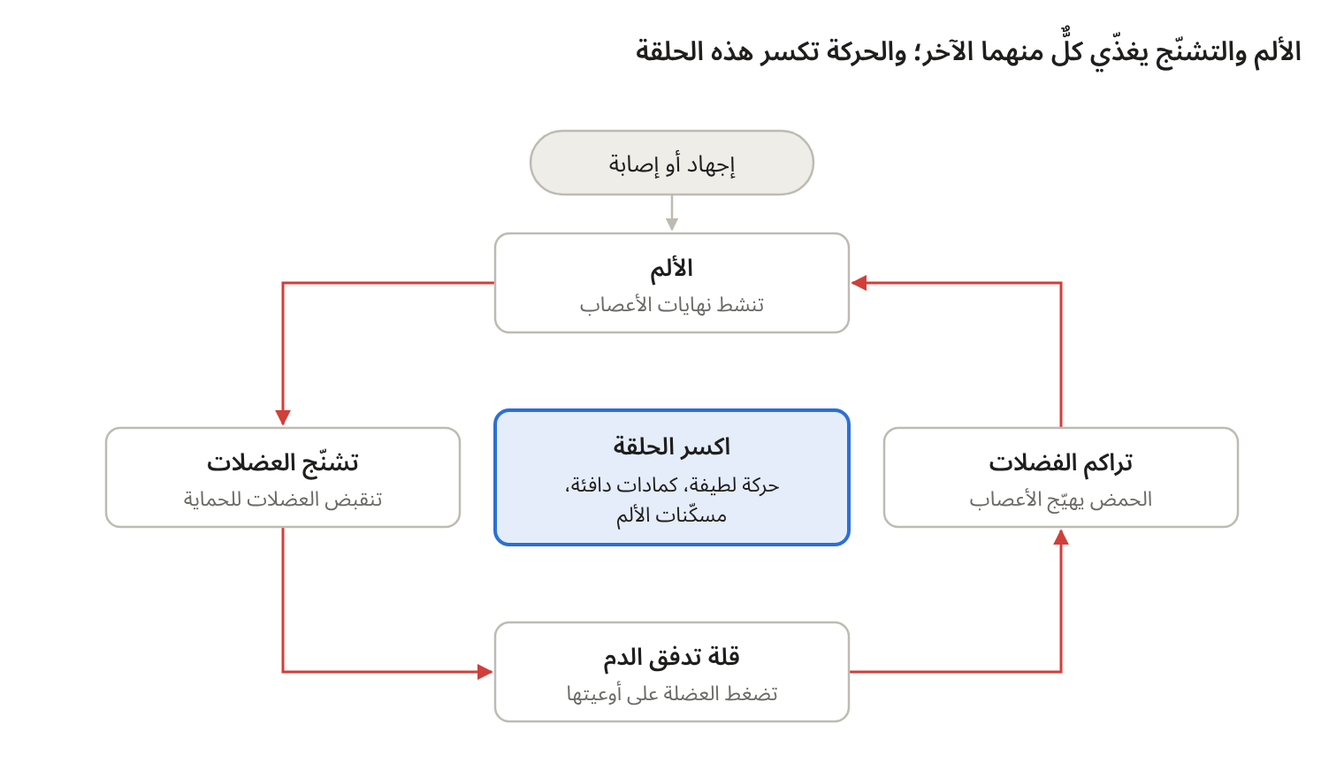
تشنّج العضلات: تنقبض العضلات لحماية المنطقة، فتضغط على أوعيتها الدموية ويزداد الألم — وهي حلقة تكسرها الحركة اللطيفة (الشكل 3).
الضغط على العصب: يهيّج القرص الغضروفي أو القناة المتضيّقة أحد الأعصاب، فيمتد الألم إلى الساق.
زيادة الحساسية للألم: الألم الذي يستمر أكثر من 3 أشهر قد «يرفع» درجة إنذار الجهاز العصبي. والنوم الجيد والنشاط والطمأنينة تخفض هذا الإنذار.
المزيد عن ألم العضلات
إجهاد العضلات والأربطة هو أكثر أسباب آلام الظهر شيوعًا. وتشترك عدة عمليات في إحداث الألم:
تمزّقات دقيقة: يؤدي الحِمل المفاجئ أو الإجهاد المتكرر إلى تمزّق ألياف عضلية دقيقة. وتُطلق الخلايا المتضررة موادَّ كيميائية (مثل البروستاغلاندين والبراديكينين) تنشّط أعصاب الألم وتجعلها حساسة للّمس والحركة.
الحماية والتشنّج: تنقبض العضلات المجاورة لحماية المنطقة. والعضلة التي تبقى مشدودة تضغط على أوعيتها الدموية، فيقل وصول الأكسجين إليها.
تراكم الفضلات: مع قلة تدفق الدم يتراكم الحمض وفضلات أخرى في العضلة، فتهيّج الأعصاب وتسبب مزيدًا من التشنّج.
نقاط الزناد: قد تتكوّن عُقد مشدودة ومؤلمة في العضلة، وتنقل الألم إلى الأرداف أو الورك.
ضعف اللياقة: تجنّب الحركة يُضعف العضلات العميقة التي تدعم العمود الفقري، فيصبح الظهر أكثر عرضة للإجهاد مرة أخرى.
الخوف من الحركة: القلق من إيذاء الظهر يؤدي إلى التيبّس والتحفّظ في الحركة، مما يزيد الألم.
كيف تلتئم العضلات: يبلغ الالتهاب ذروته خلال أول 2 إلى 5 أيام، ويستغرق الإصلاح من 1 إلى 6 أسابيع، ثم تقوى الأنسجة الجديدة خلال الأشهر التالية. والنشاط اللطيف أثناء فترة الإصلاح يساعد الألياف الجديدة على الالتئام بقوة.
كثيرًا ما تُظهر الأشعة «تآكلًا» لدى أشخاص لا يعانون أي ألم — وهو أمر طبيعي غالبًا بالنسبة لأعمارهم.
علامات الخطر: اطلب الرعاية العاجلة
توجّه إلى قسم الطوارئ فورًا إذا صاحب ألمَ الظهر تنميلٌ حول الأعضاء التناسلية أو الأرداف، أو صعوبة جديدة في التبوّل، أو فقدان التحكم في المثانة أو الأمعاء، أو ضعف في الساقين كلتيهما. فقد تدل هذه الأعراض على متلازمة ذيل الفرس، التي تتطلب جراحة طارئة.
راجع الطبيب خلال 24 ساعة إذا كنت تعاني من حمّى، أو لديك تاريخ مرضي بالسرطان أو فقدان وزن غير مبرر، أو ألم بعد سقوط أو إصابة، أو ألم مستمر ليلًا، أو تتناول الكورتيزون لفترة طويلة.
التشخيص
يُشخَّص معظم آلام الظهر بالفحص السريري وحده. ولا تلزم الأشعة (الرنين المغناطيسي أو الأشعة المقطعية أو الأشعة السينية) إلا عند وجود علامات خطر، أو أعراض عصبية شديدة أو متفاقمة، أو عدم التحسّن بعد 6 أسابيع. والأشعة المبكرة لا تُسرّع الشفاء.
العلاج
العناية الذاتية
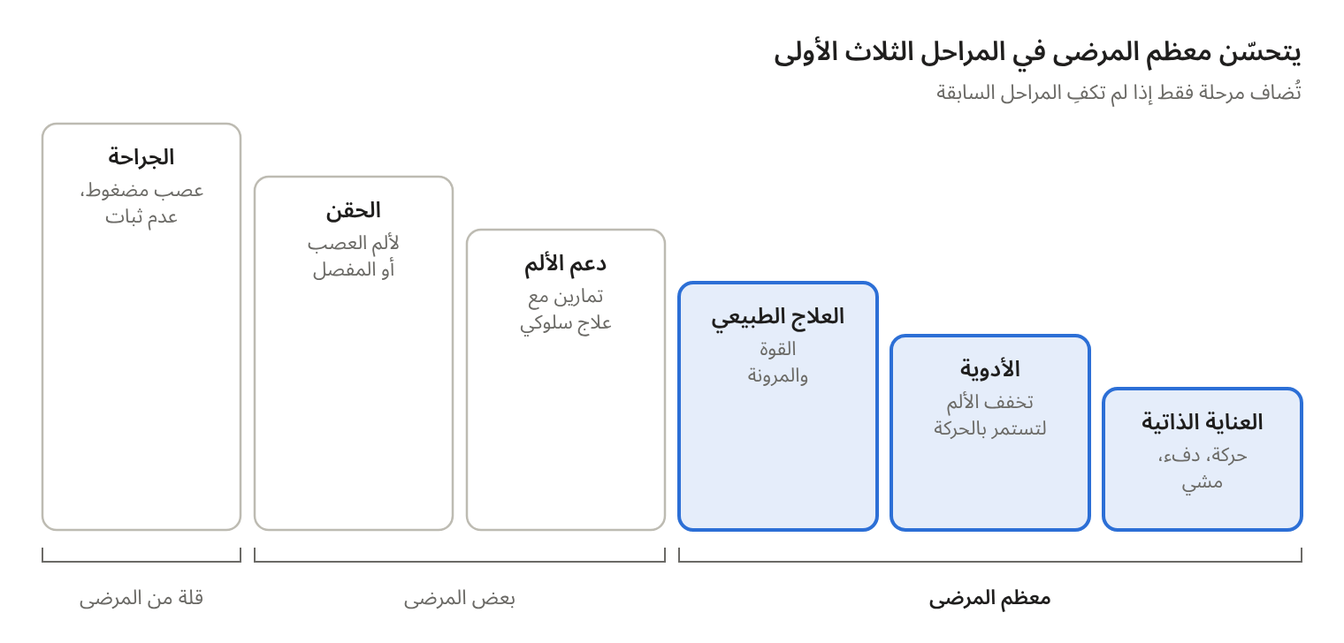
استمر في الحركة: الراحة في الفراش تُبطئ الشفاء؛ عُد إلى نشاطك الطبيعي وعملك في أقرب وقت ممكن
امشِ قليلًا كل يوم وزِد المسافة تدريجيًا
استخدم الكمادات الدافئة لتخفيف التشنّج والتيبّس
غيّر وضعيتك كل 30 إلى 45 دقيقة على الأقل
الأدوية
تناول الأدوية فقط كما يصفها طبيبك، ولأقصر مدة ممكنة.
| الدواء | النوع | أهم النقاط |
|---|---|---|
| لصقة أولفين Olfen (ديكلوفيناك) | لصقة مضادة للالتهاب | صباحًا ومساءً، على جلد نظيف وسليم |
| لصقة روكسونين Roxonin (لوكسوبروفين) | لصقة مضادة للالتهاب | مرة يوميًا؛ أزلها إذا تهيّج الجلد |
| موبيك Mobic (ميلوكسيكام) | أقراص مضادة للالتهاب | مرة يوميًا، مع الطعام |
| نابروكسين Naproxen | أقراص مضادة للالتهاب | عادةً مرتين يوميًا، مع الطعام |
| تيلاكس Tilax (تيزانيدين) | مُرخٍ للعضلات | يسبب النعاس؛ لا يؤخذ مع سيبروفلوكساسين أو فلوفوكسامين |
| باكلوفين Baclofen | مُرخٍ للعضلات | يسبب النعاس؛ لا توقفه فجأة بعد الاستخدام المنتظم |
| باراسيتامول Paracetamol | مسكّن للألم | لا تتجاوز الجرعة اليومية القصوى |
استشر طبيبك قبل تناول مضادات الالتهاب إذا كنت تعاني من قرحة في المعدة أو مرض في الكلى أو القلب، أو تتناول مميّعات الدم، أو كنتِ حاملًا. ولا تجمع أبدًا بين نوعين من مضادات الالتهاب، بما في ذلك اللصقة مع الأقراص.
لا تقُد السيارة أثناء تناول مرخيات العضلات، وتجنّب الكحول.
اطلب المساعدة الطبية عند ظهور براز أسود، أو تقيؤ دم، أو ألم شديد في المعدة.
العلاج الطبيعي والتمارين
التمارين هي أكثر العلاجات طويلة المدى ثبوتًا في فعاليتها. مارِسها مرة أو مرتين يوميًا، وابدأ بـ5 تكرارات ثم زِدها تدريجيًا إلى 10. توقّف إذا شعرت بألم حاد، أو امتد الألم أو التنميل إلى ساقك أو ذراعك.
| التمرين | طريقة الأداء |
|---|---|
| أسفل الظهر | |
| إمالة الحوض | استلقِ على ظهرك مع ثني الركبتين: اضغط أسفل ظهرك على الأرض. اثبت 5 ثوانٍ |
| الركبة إلى الصدر | استلقِ على ظهرك: اسحب إحدى ركبتيك برفق نحو صدرك. اثبت 20 ثانية، ثم بدّل |
| تمرين القطة والجمل | على اليدين والركبتين: قوّس ظهرك ببطء إلى أعلى، ثم اتركه ينخفض برفق |
| تمرين الطائر والكلب | على اليدين والركبتين: مُدّ ذراعًا إلى الأمام والساق المقابلة إلى الخلف. اثبت 5 ثوانٍ |
| تمرين الجسر | استلقِ على ظهرك مع ثني الركبتين: شُدّ عضلات الأرداف وارفع الوركين. اثبت 5 ثوانٍ |
| الرقبة وأعلى الظهر | |
| إرجاع الذقن | اجلس مستقيمًا: اسحب ذقنك إلى الخلف بشكل مستقيم. اثبت 5 ثوانٍ |
| إمالة الرقبة الجانبية | أمِل إحدى أذنيك نحو كتفك. اثبت 20 ثانية، ثم بدّل |
| ضمّ لوحي الكتف | اضغط لوحي كتفيك معًا وإلى الأسفل. اثبت 5 ثوانٍ |
المشي والسباحة والبيلاتس واليوغا مفيدة أيضًا. راجع طبيبك سريعًا إذا صاحب ألمَ الرقبة ضعفٌ أو تنميل في الذراعين، أو اضطراب في التوازن.
الحقن والجراحة
لدى بعض المرضى الذين يعانون ألمًا عصبيًا أو مفصليًا، قد تخفف حقنة موجّهة بالأشعة الألم لأسابيع أو أشهر. ويُنظر في الجراحة عند الإصابة بمتلازمة ذيل الفرس، أو تفاقم ضعف الساق، أو استمرار ألم الساق المُعيق بعد 6 إلى 12 أسبوعًا من العلاجات الأخرى. والعمليات الشائعة — استئصال القرص المجهري، وتوسيع القناة الشوكية، والتثبيت — كثيرًا ما تُجرى عبر شقوق صغيرة، وتعطي أفضل النتائج في ألم الساق الناتج عن عصب مضغوط.
حماية ظهرك
حافظ على نشاطك: امشِ 30 دقيقة في معظم الأيام
حافظ على قوة عضلات الجذع وعلى وزن صحي
احمل الأشياء بثني الركبتين، مع إبقاء الحِمل قريبًا من جسمك
خُذ فترات راحة من الجلوس، وأقلع عن التدخين
متى تراجع الطبيب
راجع طبيبك إذا لم يتحسّن الألم بعد 4 إلى 6 أسابيع، أو ازدادت أعراض الساق أو الذراع سوءًا، أو منعك الألم من العمل أو النوم.